

ANNUAL REPORT 2025
Technological, climate, and demographic shifts are redefining the landscape of existing jobs and the conditions under which they are performed. In Latin America and the Caribbean, these changes unfold in labor markets marked by structural challenges: persistent inequality, lagging productive structures, and low-quality employment.
The region’s history shows that windows of opportunity created by periods of transformation have not always been seized. Today, a new window of opportunity is emerging, calling for informed, locally grounded decision-making and collective action.
In 2025, we renewed our commitment to ensuring everyone accesses decent and resilient employment. Through applied research, public policy engagement, and multi-stakeholder partnerships, we advanced agendas addressing technological change, the climate transition, and care work from a social impact perspective, contributing to a more inclusive and resilient development pathway for the region.
We invite you to explore our impact in 2025.
1. Knowledge generation:
strategic pillars for a regional future of work agenda
We advanced a regional, evidence-based knowledge agenda oriented toward decision-making, generating and connecting strategic insights on the future of work in Latin America and the Caribbean. We developed three core research lines, all guided by a shared question: how are technological, climate, and demographic transformations reshaping work in Latin America and the Caribbean?

Technological change and new forms of work
Does technology reduce or widen inequalities?We pursued two complementary lines of Analysis to examine how technological change is reconfiguring employment: 1. An experimental study on generative AI to assess whether these tools can help reduce skills gaps. 2. A regional agenda on platform work, analyzing how this form of employment is organized and how it is captured in labor statistics.
Analysis across 8 countries in the region. In partnership with UAI (Chile), UBA (Argentina), University of Toronto (Canada), UNR (Argentina), OdePP (Peru), UCU (Uruguay), TEDIC (Paraguay), UNLP–CEDLAS (Argentina), UTDT (Argentina), University of Maryland (USA), and University of Nottingham – CIEDUR (UK).Climate change and green jobs
Can family agriculture generate green jobs?Agriculture employs up to one in four workers in several countries in the region. Drawing on evidence from Bolivia, Peru, and Ecuador, we analyzed the impacts of climate change on quinoa production and family-based agricultural work, as well as the barriers to adopting sustainable technologies.
Analysis across 3 countries -Development of a taxonomy of sustainable practices
In partnership with INESAD (Bolivia).
Demographic transition and the care sector
How can the quality of care occupations be enhanced? Based on 4,000 surveys of domestic workers in Guatemala, Honduras, and El Salvador, the study makes visible the skills involved in care work and the gaps in labor recognition, providing evidence to support its professionalization, the reduction of informality, and the strengthening of fairer care systems in Central America.
Analysis across 3 countries
4,000 surveys of domestic workers
In partnership with ATRAHDOM (Guatemala), SINTRAHO (Honduras), and SINTDCES (El Salvador)
How can more people be prepared for emerging jobs? Adapting, strengthening, and expanding training in strategic skills and disciplines is critical to supporting employment transitions across the region. Sur Futuro promotes a regional agenda focused on technical and vocational education and workforce development, aimed at linking labor market transformations with higher-quality employment trajectories in Latin America and the Caribbean.
The Atlas of Future Jobs has consolidated its position as Sur Futuro’s flagship contribution to understanding labor market transformations in Latin America and the Caribbean.
In 2025, we worked to extend its coverage to 20 countries, broadening its scope to capture new labor market dynamics: we incorporated the impact of generative AI, assessing which jobs are likely to be augmented by these technologies and which face higher risk, and integrated skilled trades as a potential strategic employment segment.
Through a comparative Analysis of employment trends over the past ten years, the Atlas provides a key input for prioritizing employment, skills, and labor transition policies across the region.
The report will be released in the coming weeks. Leave your contact details and we’ll share it with you as soon as it’s available.

Atlas of Future Jobs: pioneering research on Latin America and the Caribbean
2. Technical cooperation: evidence at the service of public debate and the policy agenda
In 2025, we brought evidence to the centre of public debate and the policy agenda. We participated in key regional and international discussion spaces, engaged in dialogue with governments, parliaments, and productive sector actors, and translated research findings into clear messages for public action.
This work enabled us to articulate a Latin American perspective on the future of work, providing concrete input to inform decision-making on employment, skills, care, and productive transition.
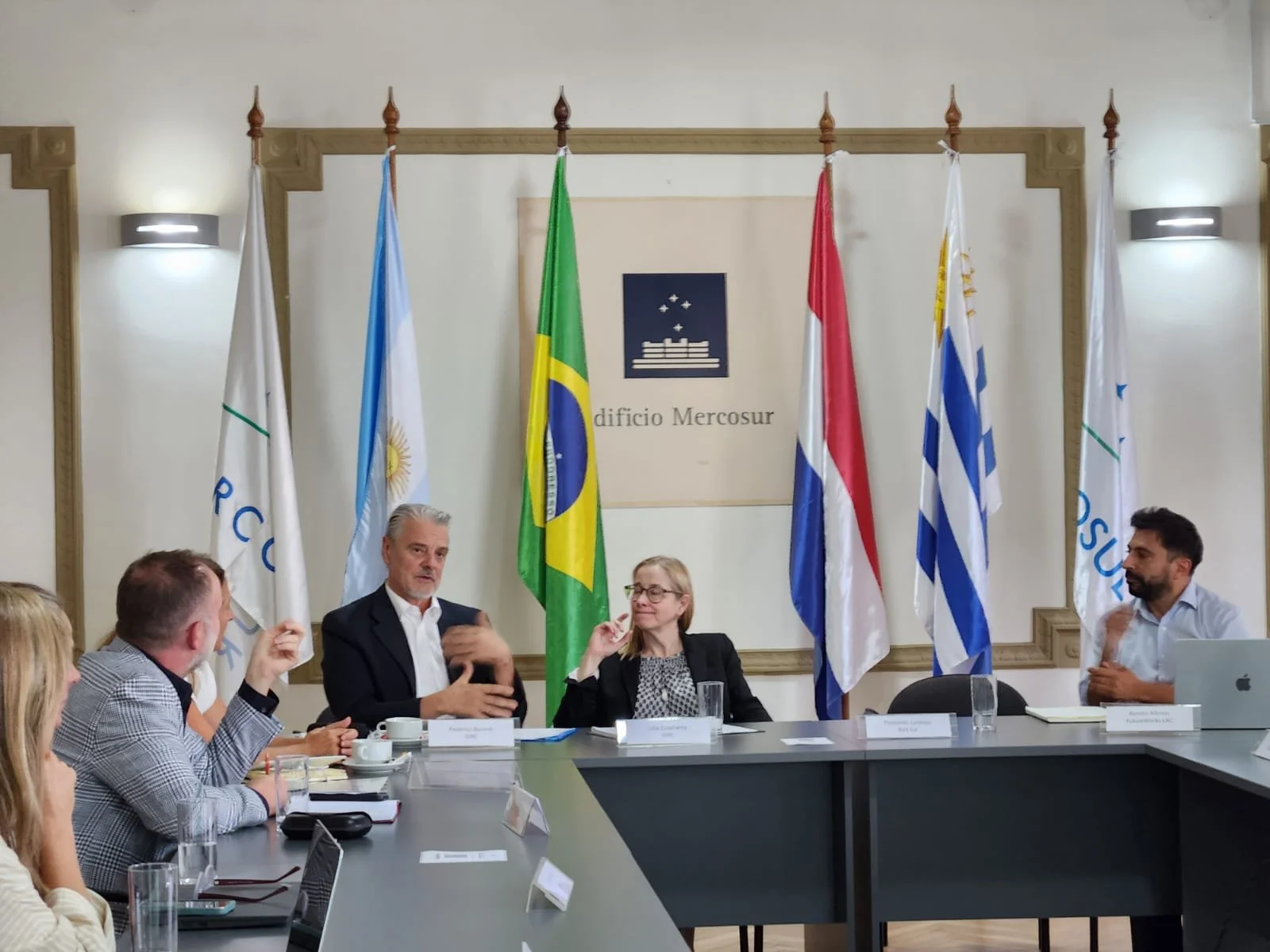
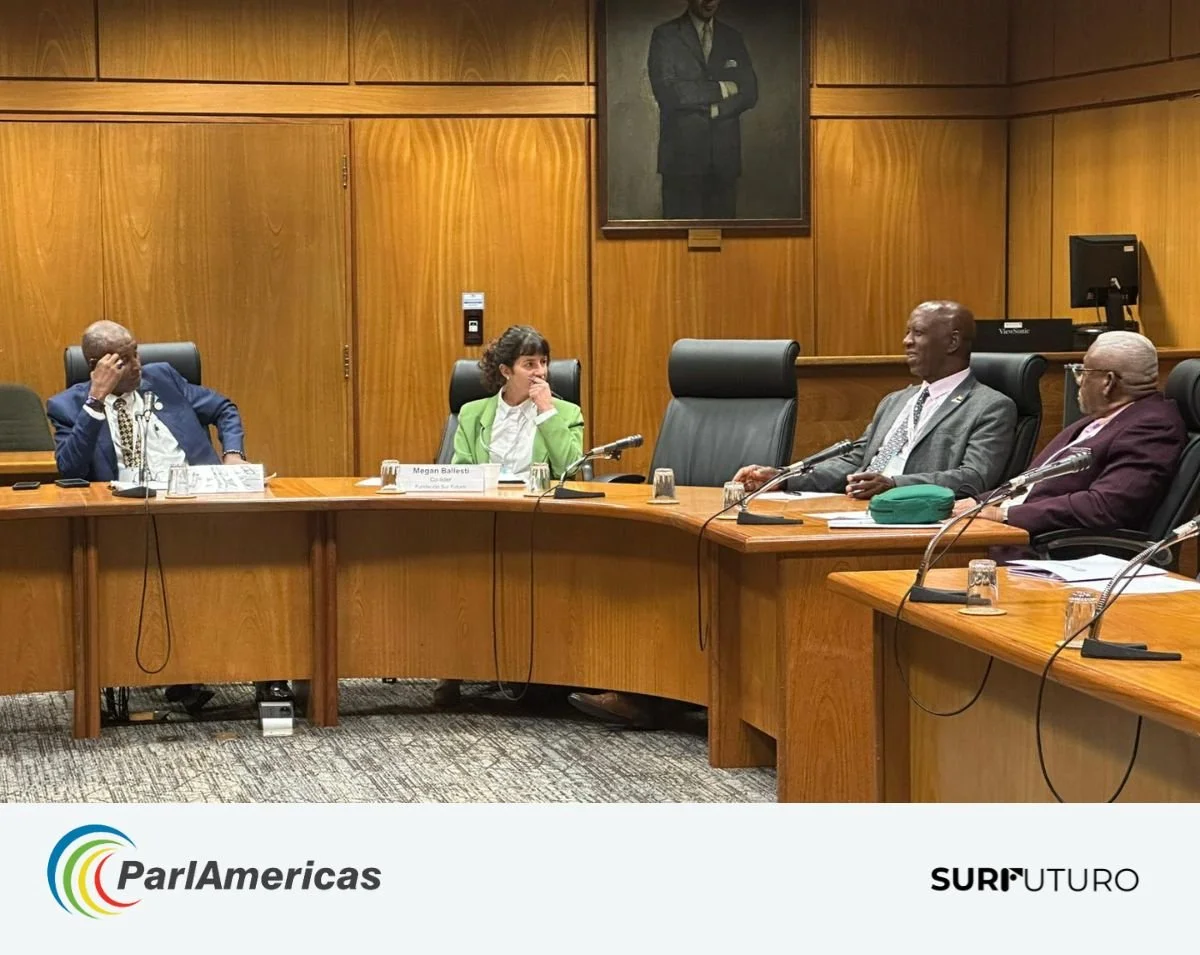
Anticipatory governance and the future of work at ParlAmericas
At the 21st ParlAmericas Plenary Assembly and the 9th Open Parliament Network Meeting, we contributed to regional parliamentary dialogue with a strategic perspective on how declining birth rates and population ageing are reshaping labor markets.
The exchange made it possible to situate these challenges across different time horizons and to provide inputs for legislative debates aimed at anticipating and governing transformations in the world of work.
Collective intelligence training with Southern Voice
In partnership with Southern Voice, we delivered training for development specialists from the Global South to introduce the collective intelligence approach.
The sessions focused on the design of collaborative processes to address complex challenges, combining diversity of perspectives with a clear results orientation, and presented collective intelligence as a practical tool for knowledge production and policy engagement.
Participation in the ECOSOC Partnership Forum
Within the framework of the Partnership Forum of the United Nations Economic and Social Council (ECOSOC), one of the UN system’s main spaces for articulating partnerships around the 2030 Agenda, we participated in a session addressing the impacts of artificial intelligence on gender equality, decent work, and development partnerships.
The space enabled dialogue between the agendas of AI and employment from a Global South perspective, highlighting the need for inclusive and contextualized strategies in the face of technological transformations.
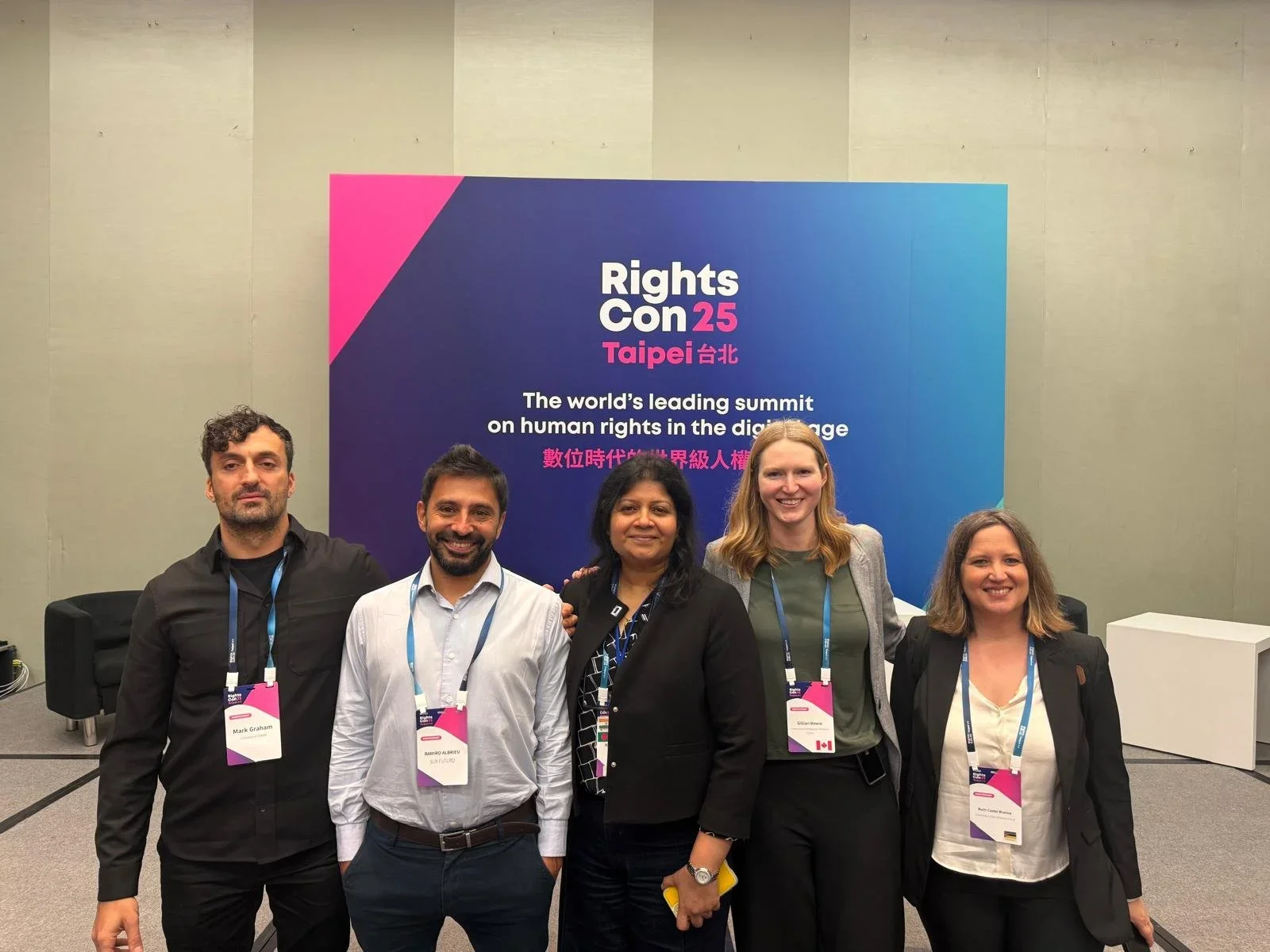
Diálogo global sobre trabajo y tecnología en RightsCon
At RightsCon 2025, a global forum bringing together governments, the technology sector, academia, and civil society, we organized a panel to discuss how artificial intelligence and digitalization are transforming employment in Global South countries.
The dialogue articulated technology and human rights agendas with debates on work, training, and regulation, incorporating a labor perspective into discussions on digital governance.
3. Multi-stakeholder articulation: partnerships as infrastructure for impact
We worked through partnerships with civil society organizations, research centres, private sector actors, international cooperation organizations, and public agencies, understanding multi-stakeholder articulation as a key condition for scaling impact.
These partnerships made it possible to integrate technical capacities, resources, territorial reach, and access to decision-making spaces, reducing ecosystem fragmentation and increasing the likelihood that the evidence produced translates into concrete policies, programmes, and actions for the future of work in the region.
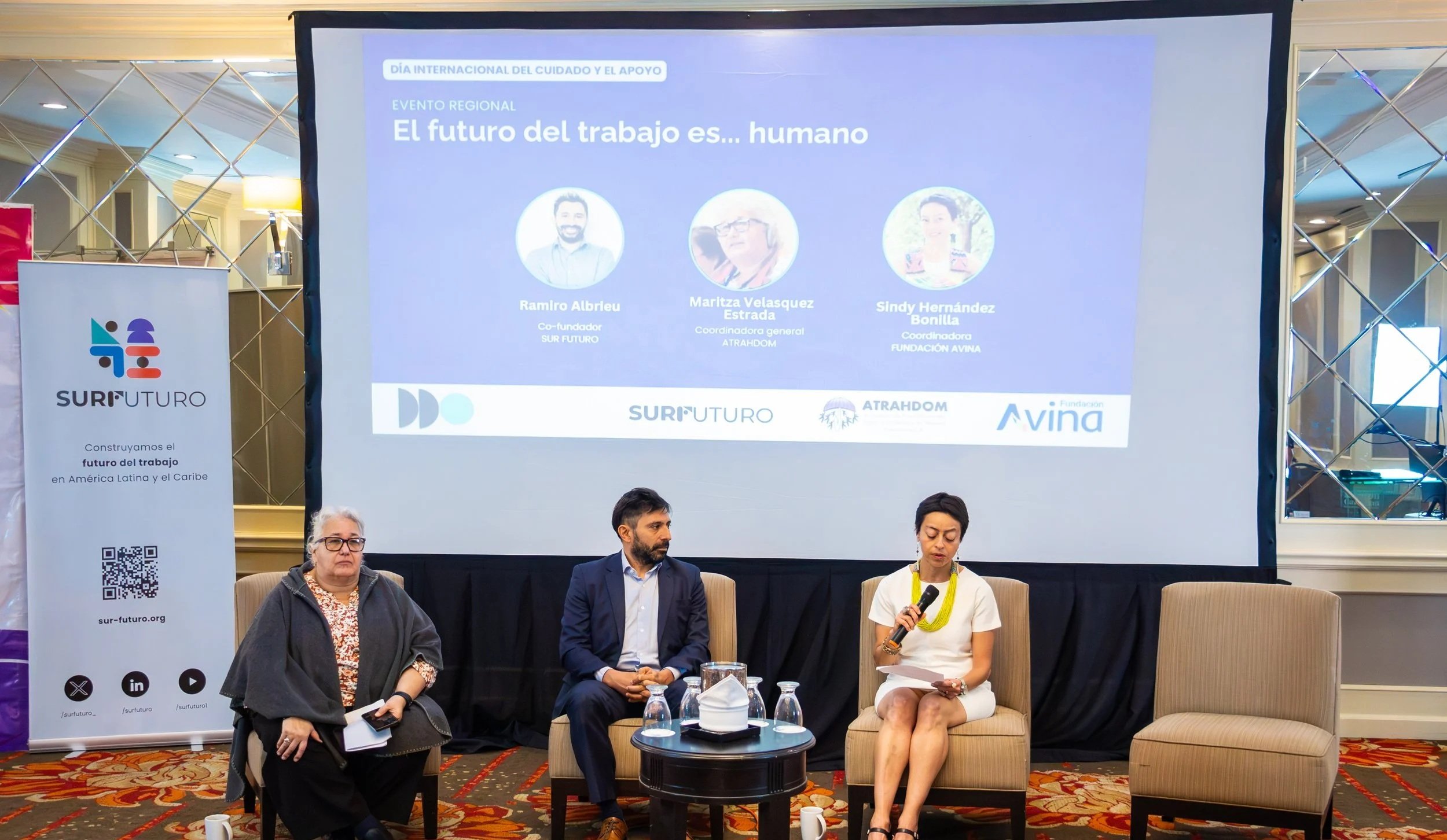
Event “The future of work… is human” with Fundación AVINA and Atrahdom
In partnership with Fundación AVINA and Atrahdom, we organized a regional event that brought together 80 representatives from governments, trade unions, academia, international cooperation, and civil society organizations. The event articulated a multi-stakeholder conversation to integrate evidence, comparative data, and the perspectives of decision-makers, strengthening regional dialogue and contributing to the construction of consensus around the future of work and care.
Initiative with the ILO and Fundación Oficios on youth employment
Together with the International labor Organization (ILO) and Fundación Oficios, we developed a project focused on understanding and addressing the challenges faced by young people in their transition into the world of work in Argentina. Based on situated evidence and participatory methodologies, we designed a toolkit aimed at government actors to support local strategies for awareness-raising and the accompaniment of youth labor trajectories.
Joining the Global Alliance for Care
We joined the Global Alliance for Care as part of an international articulation strategy aimed at strengthening the care agenda from an employment, gender, and development perspective.
This participation allows us to contribute evidence produced in Latin America and the Caribbean to the global debate, exchange learnings with other actors, and contribute to the construction of frameworks and recommendations that promote fairer, more accessible, and more sustainable care systems.

Collective action for regional impact
Sur Futuro advances its agenda through strategic partnerships at the regional level. Joint work with civil society organizations, knowledge centers, governments, the private sector, and international cooperation made it possible to amplify impact, strengthen legitimacy, and consolidate a shared agenda on the future of work in Latin America and the Caribbean.
4. Growth and institutional strengthening
n 2025, we consolidated key institutional definitions that strengthened our strategic clarity, management capacity, and organizational predictability. These definitions were materialized in a three-year plan that organizes priorities, guides decision-making, and sustains the projection of our agenda in the medium term.
In parallel, we developed an institutional metrics system to monitor results and strengthen accountability, and we advanced an active strategy for funding diversification and financial sustainability that ensures continuity and impact.
Participation in the media and in dissemination spaces strengthens Sur Futuro’s influence on the public agenda. Through these channels, we contribute to positioning the future of work as a priority, providing evidence and narratives that support decisions and policies aimed at more inclusive labor markets.
We share some of the 2025 featured media mentions (in Spanish)
AI could help build a labor market that is both dynamic and equitable
In this article for La Nación, we examine how artificial intelligence is reshaping the division of tasks between people and machines, and the implications for the future of work.
What happens when fewer children are born and people live longer?
In this op-ed published in La Nación, we analyze the demographic transition as one of the silent transformations reshaping labor markets across the region.
Voices that matter. Rethinking work
We engaged in a dialogue with La Voz on the role of future skills in navigating ongoing changes in labor markets.
5. Building an inclusive and sustainable future
In 2026, Sur Futuro will deepen the development of a regional agenda on the future of work in Latin America and the Caribbean, with a focus on strengthening shared agendas and reference frameworks in collaboration with key regional actors.
Grounded in rigorous evidence and sustained engagement with regional partners, we will work to inform public and policy debates, deliver training and technical assistance to governments, and consolidate multi-stakeholder collaboration that advances a regional perspective in an increasingly relevant policy debate.
Acting on the future of work is urgent if to prevent growing inequalities and and secure quality employment for future generations.
Join us in advancing a transformation toward more inclusive and sustainable employment in Latin America and the Caribbean.
Contact us: equipo@sur-futuro.org